Increasing pharmacy efficiency with multimodal messaging
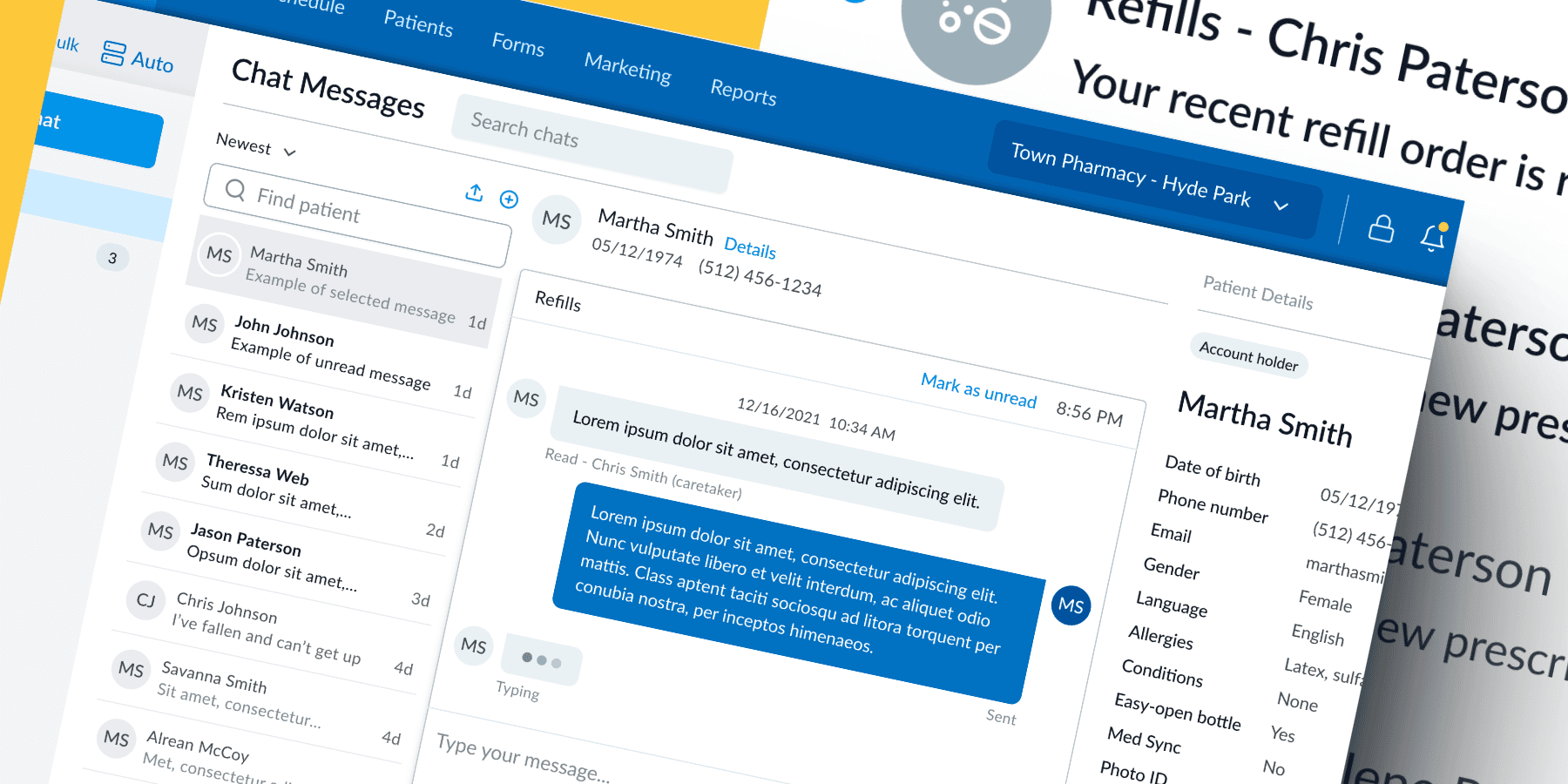

From 2017 to 2022 independent pharmacy’s market share shrunk from 23% to 5% of the total US market. Most pharmacies employ 1-2 people per day for patient out-reach.
Project scope
Design messaging as a core feature
Include bulk & automated messaging
Integrate interactive voice response product and legacy messaging tool
My role
2nd designer, 1st UX researcher
Owned patient side design
Collaborator on pharmacy side
Methods
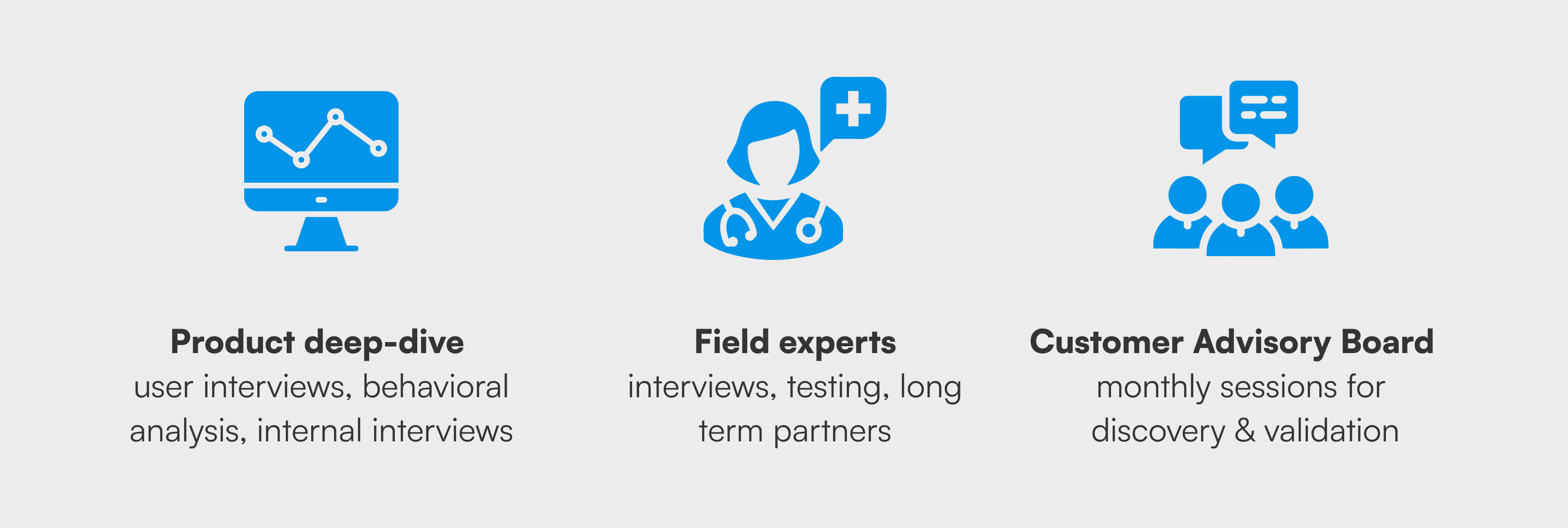
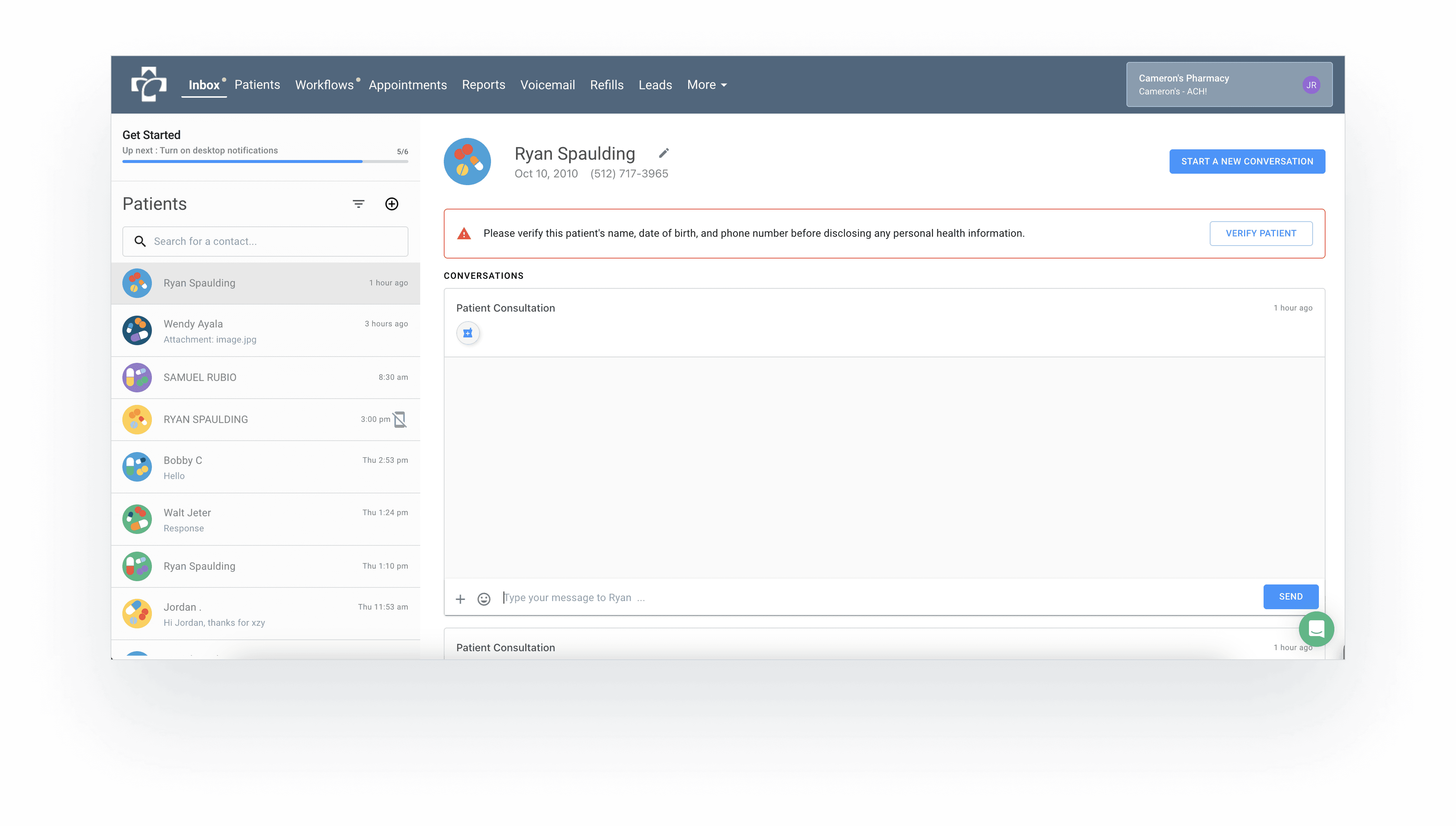
Evaluation of legacy product
Customer advisory board(CAB)
User Testing with pharmacists
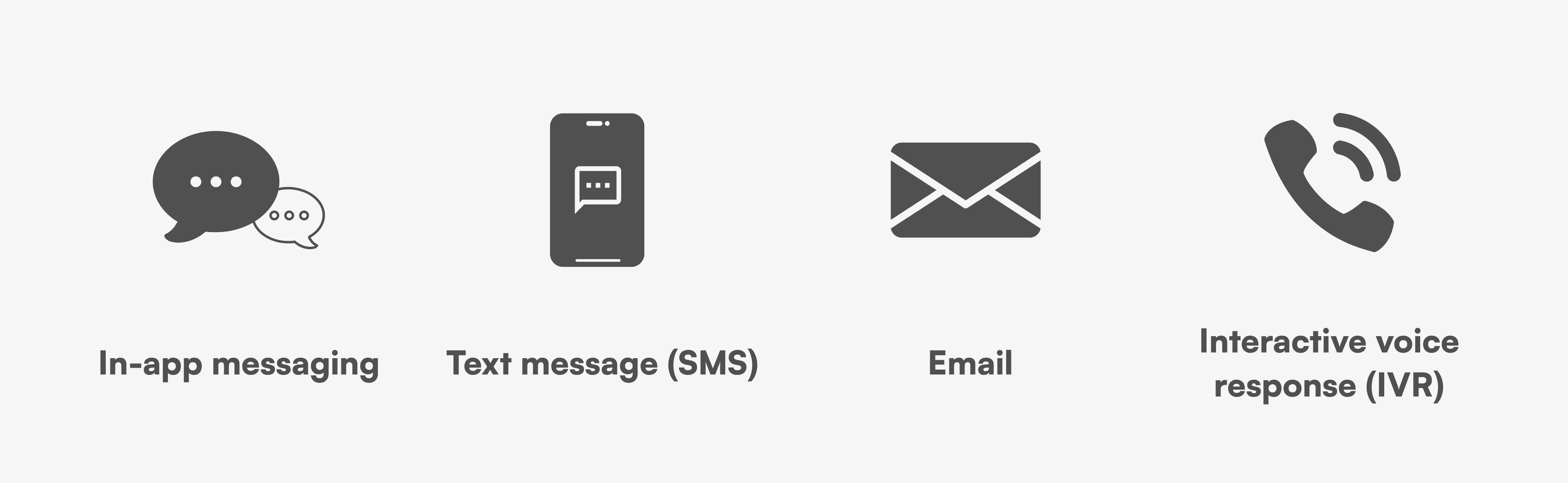
Supported channels
Problem overview
Market conditions are forcing independents to modernize, they can't afford to stay open using traditional business models from the industry.
Many partial, outdated communication solutions exist in the space but none are able to navigate the intricacies of the industry effectively enough to bring modern mass communication workflows to pharmacy.
Business goals
Create new unified communication feature by combining legacy messaging, interactive voice tree, and new features.
Minimize risk of violations for misuse of clinical and marketing channels or accidental bulk messaging of an Personal Health Information(PHI).
Lead new flagship launch strategy as primary value offering to customer.
Constraints
Out dated tech such as fax and ridged, inconsistent APIs define the space.
HIPPA and federal regulation create numerous obstacles around messaging, telecommunication, and data practices.
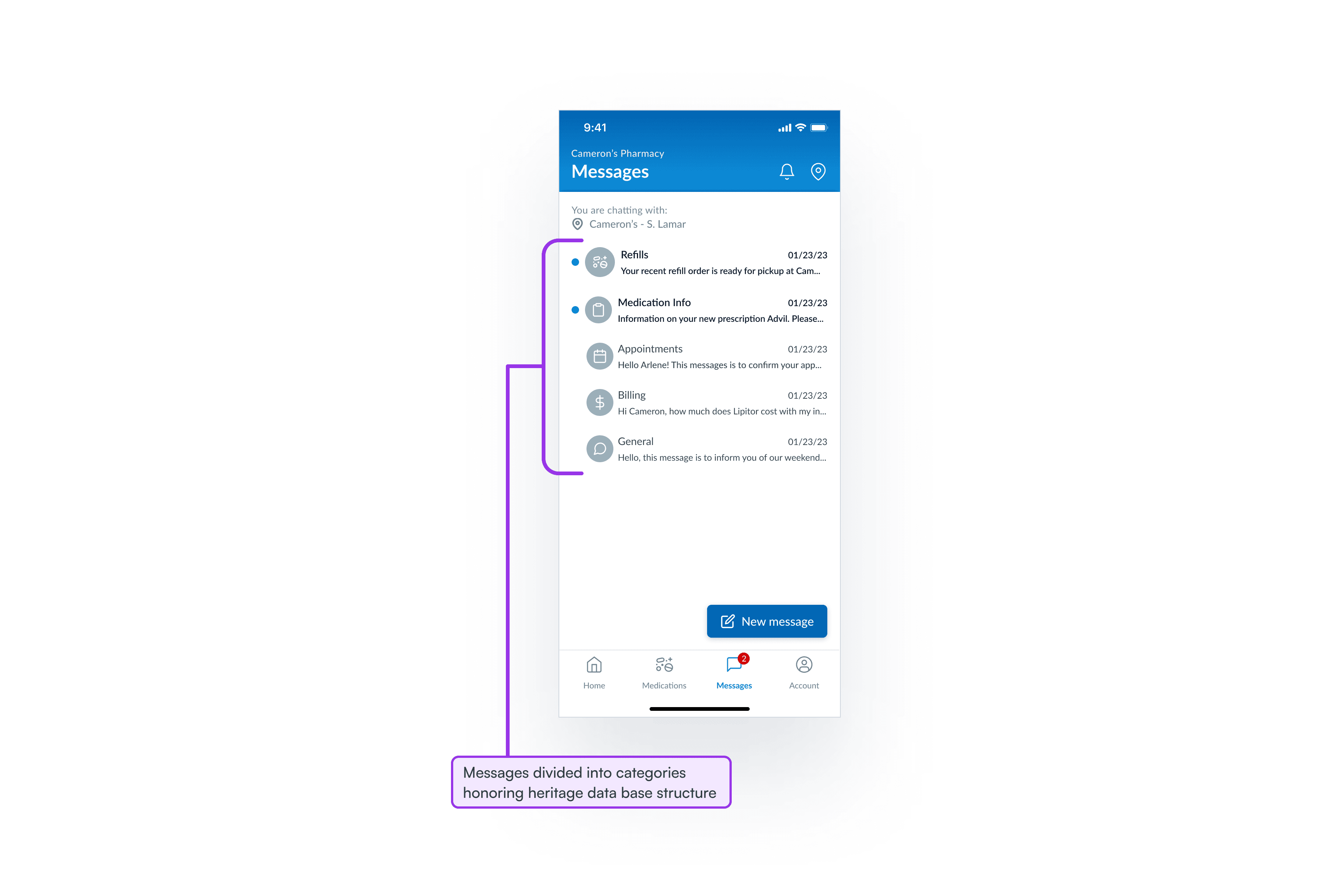
Legacy messaging tool comes with data base limitations to maintain existing message histories.
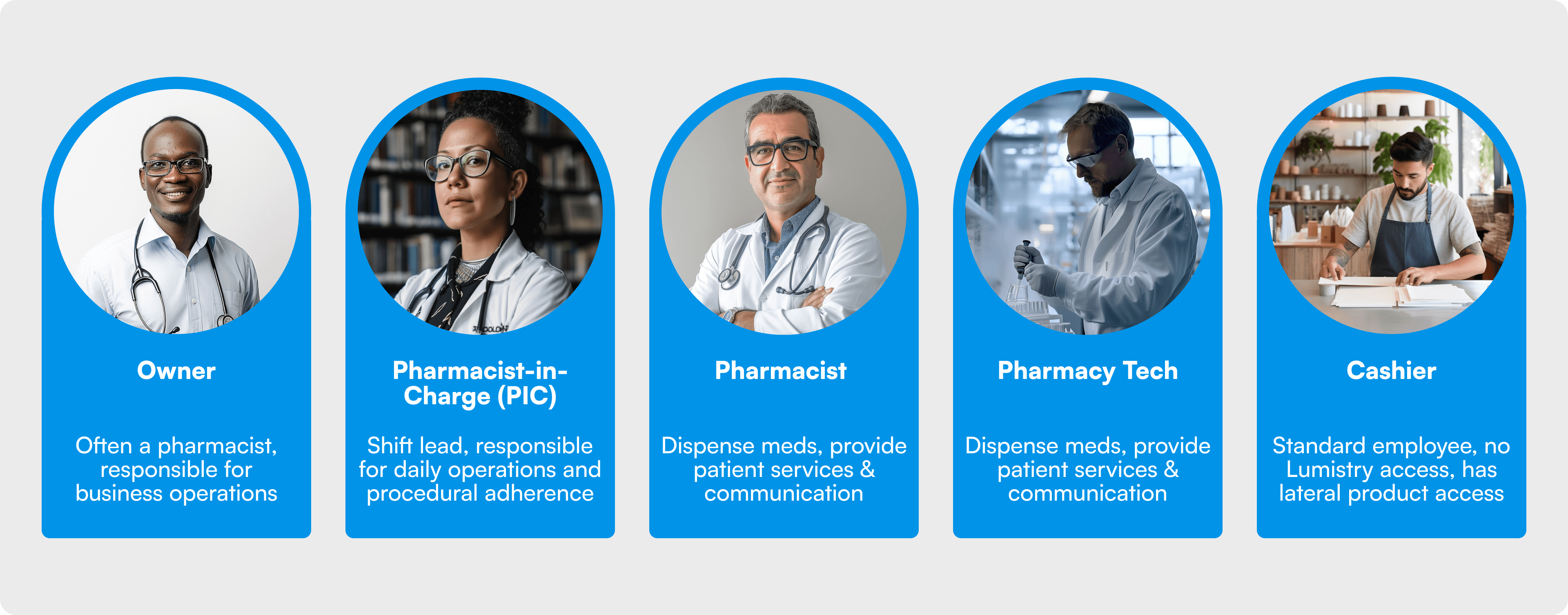
Pharmacy personas
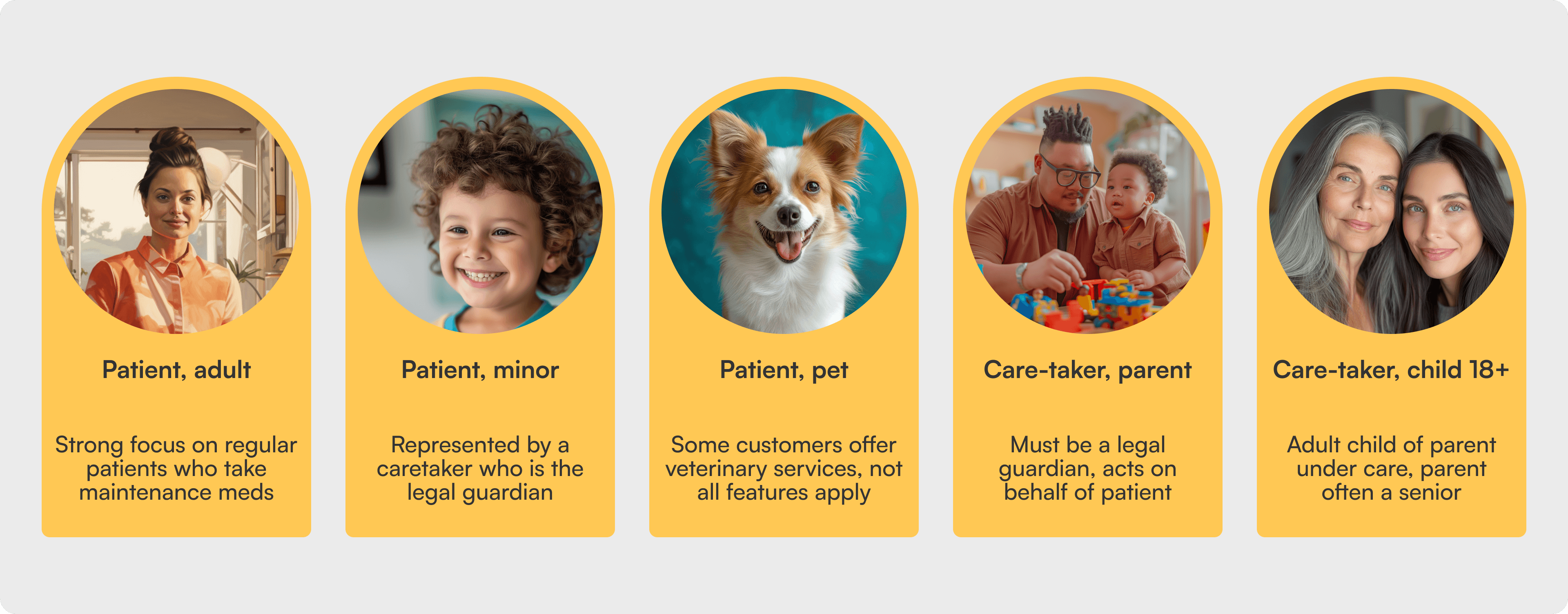
Patient personas
Research overview
Our research focused on collaborating with industry insiders and top-preforming customers of previous products. By studying the workflows these forerunners had already proven in their own businesses, we identified scalable patterns applicable across multiple business models.
Early questions
What's working in the legacy product?
What's not working in the legacy product and why?
What opportunities are we totally missing?
Where are users communicating?
What are they communicating about? Are those communications effective?
What existing reference points do users have to similar tools or technology?
Methods
Key takeaways
Customer advisory board
The customer advisory board (CAB) met monthly and consisted primarily of pharmacy owners and c-suit members from enterprise pharmacies, all licensed pharmacists. 6-12 people per session with 15 total members.
Our strategy was to have representation each session from each major business model we were targeting. For example we might have a single store owner, a small chain owner, a multi-brand owner, a mail-order, a cosmetic, and 2-3 from enterprise chains.
I would run 1-2 sessions per meeting day focused on discovery for new work and validation of work in motion.
Group bias
To mitigate some of the affects of meeting with our customers in a group our principle product manager and I came up with a plan.
All sessions would be recorded, even when in person.
Key questions identified ahead of time would have an answer collected from each participant.
If what appeared to be an insight surfaced in natural conversation we would specifically ask each other participants if they agreed or if they have had a different experience recording their answers.
By making it clear we were interested in everyones unique perspectives we found diverse experiences were more readily shared. These shared differences became a critical motivation for participants continued involvement.
Legacy messaging tool
Hypothesis
By automating and personalizing complaint, multi-channel patient communication and integrating IVR systems we can reduce manual outreach, lower federal compliance risk, and save pharmacies approximately $60k/yr per location in redundant labor.
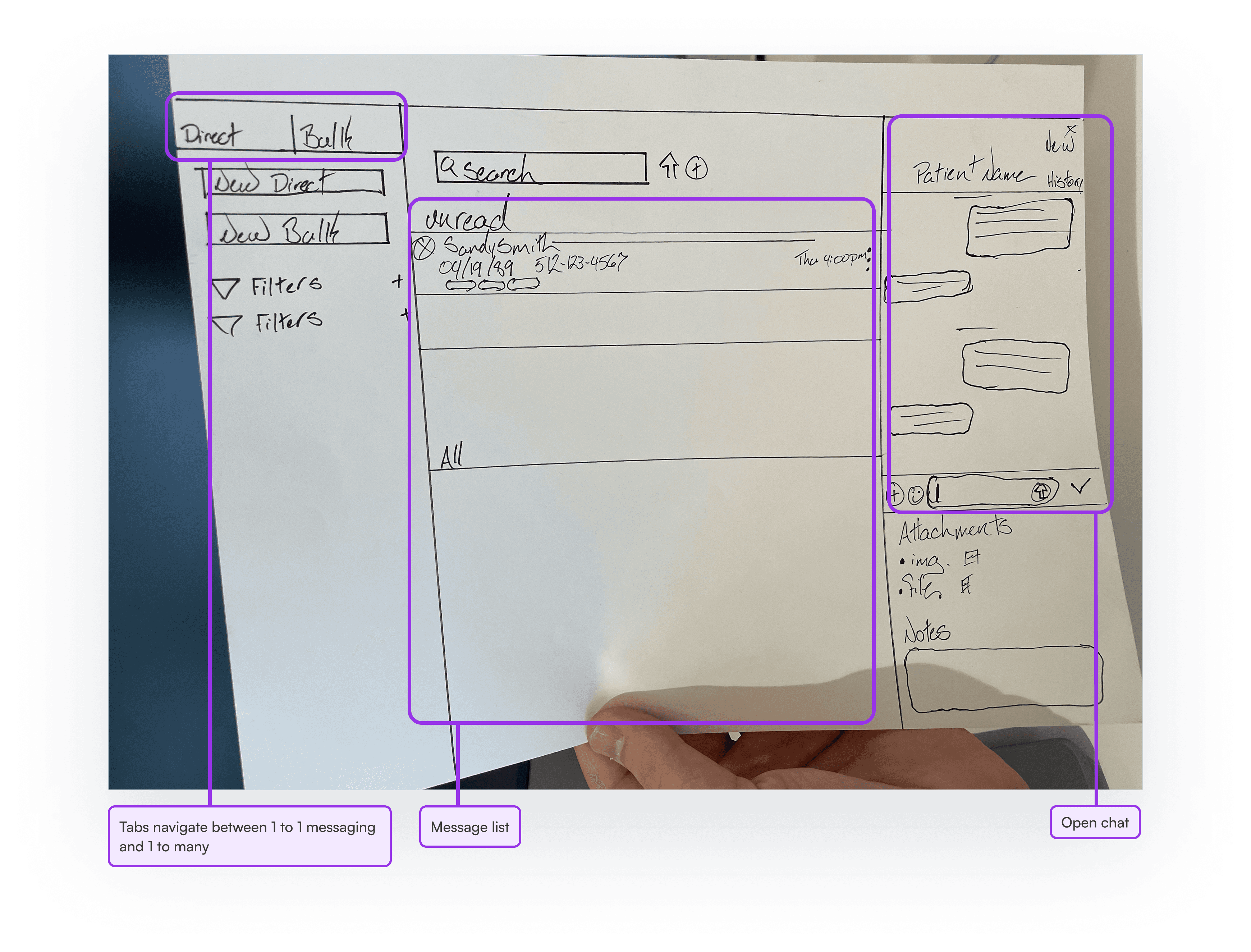
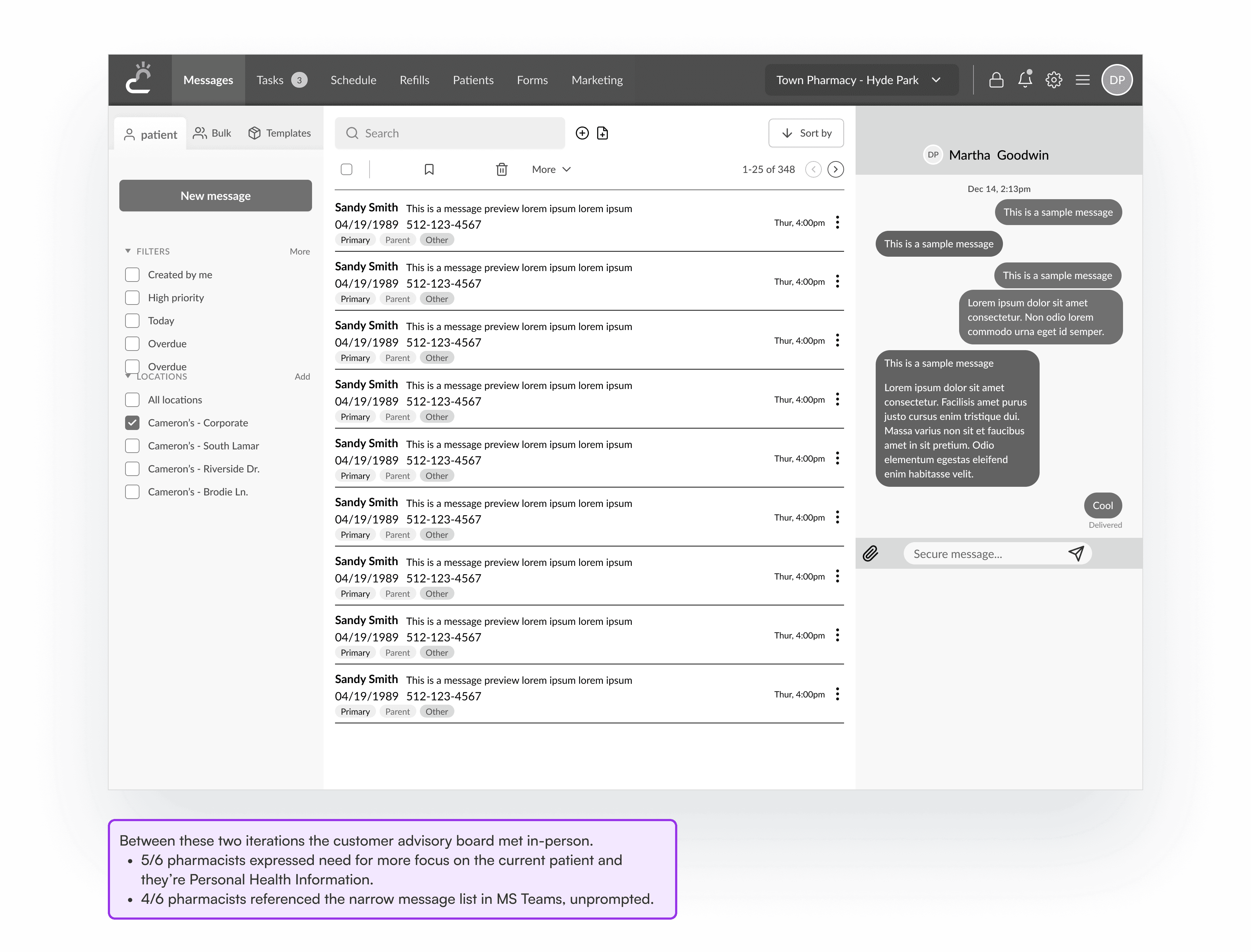
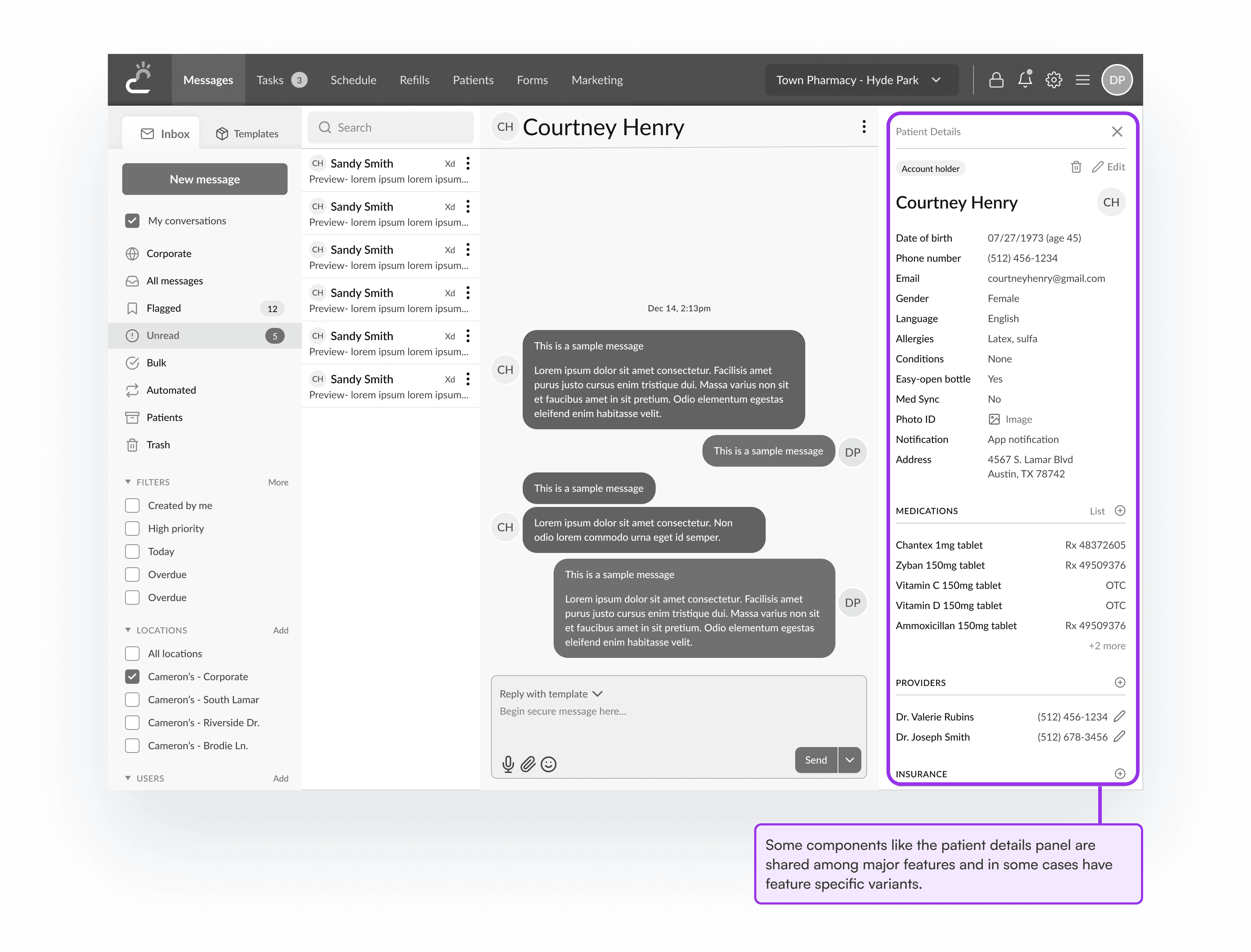
Selected low and mid-fidelity iterations
Testing overview
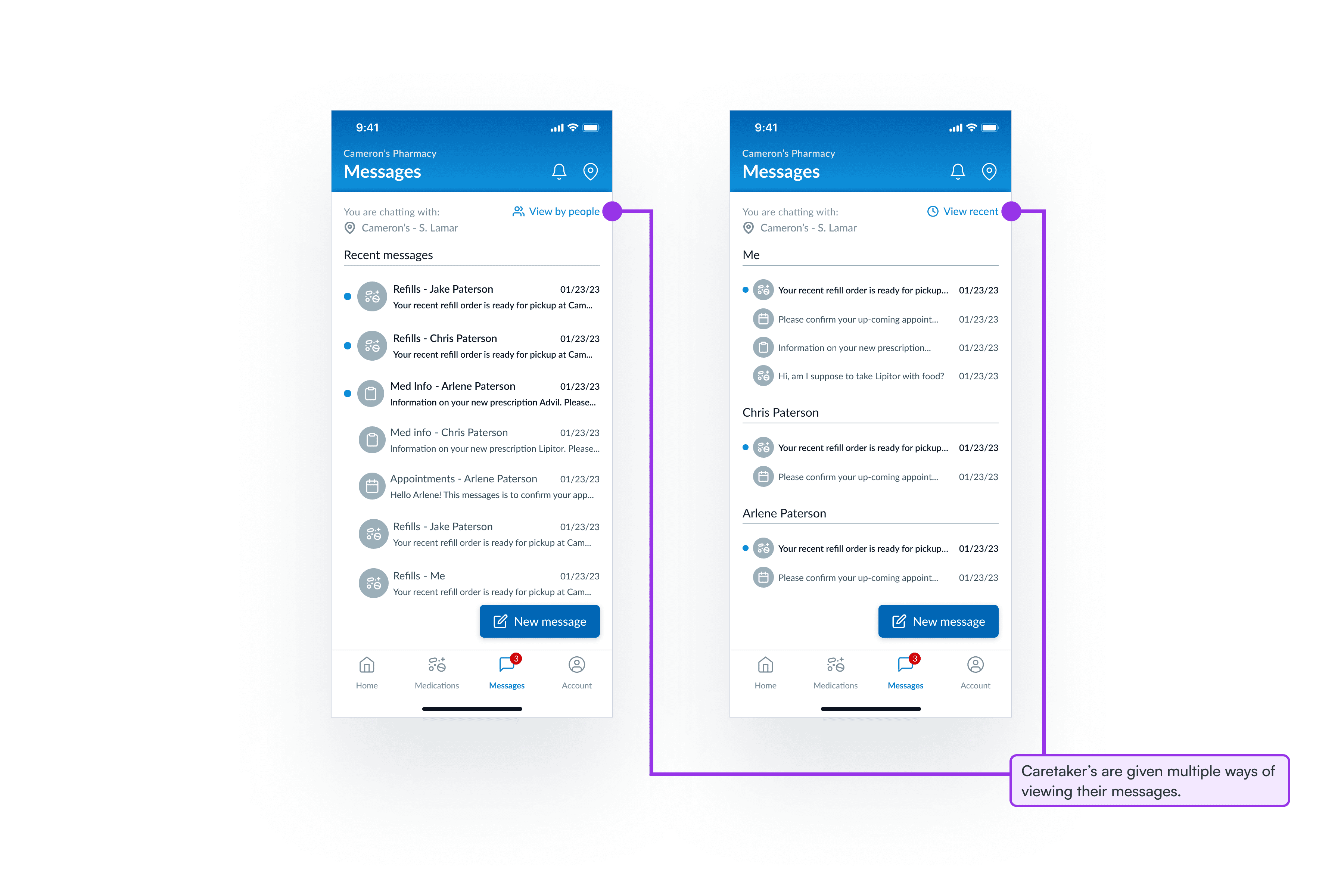
I partnered with our most principle product manager for testing. We focused heavily on specialized pharmacy workflows but also key aspects of patient personas like the caretaker system.
Types of testing
Moderated internal sessions with pharmacists, former techs, and qualified patients
Sessions with customer advisory board
Unmoderated internal testing (all hands)
Testing strategy
Phase 1
basic usability and understandability of common functions
Phase 2
Workflow optimization and effective visual hierarchy specifically for Personal Health Information and caregiver status
Phase 3
Usability of complex tasks like bulk and automated messages, clear understanding of clinical vs marketing channels, PHI in bulk messages, caretaker systems
Pharmacy experience - select screens
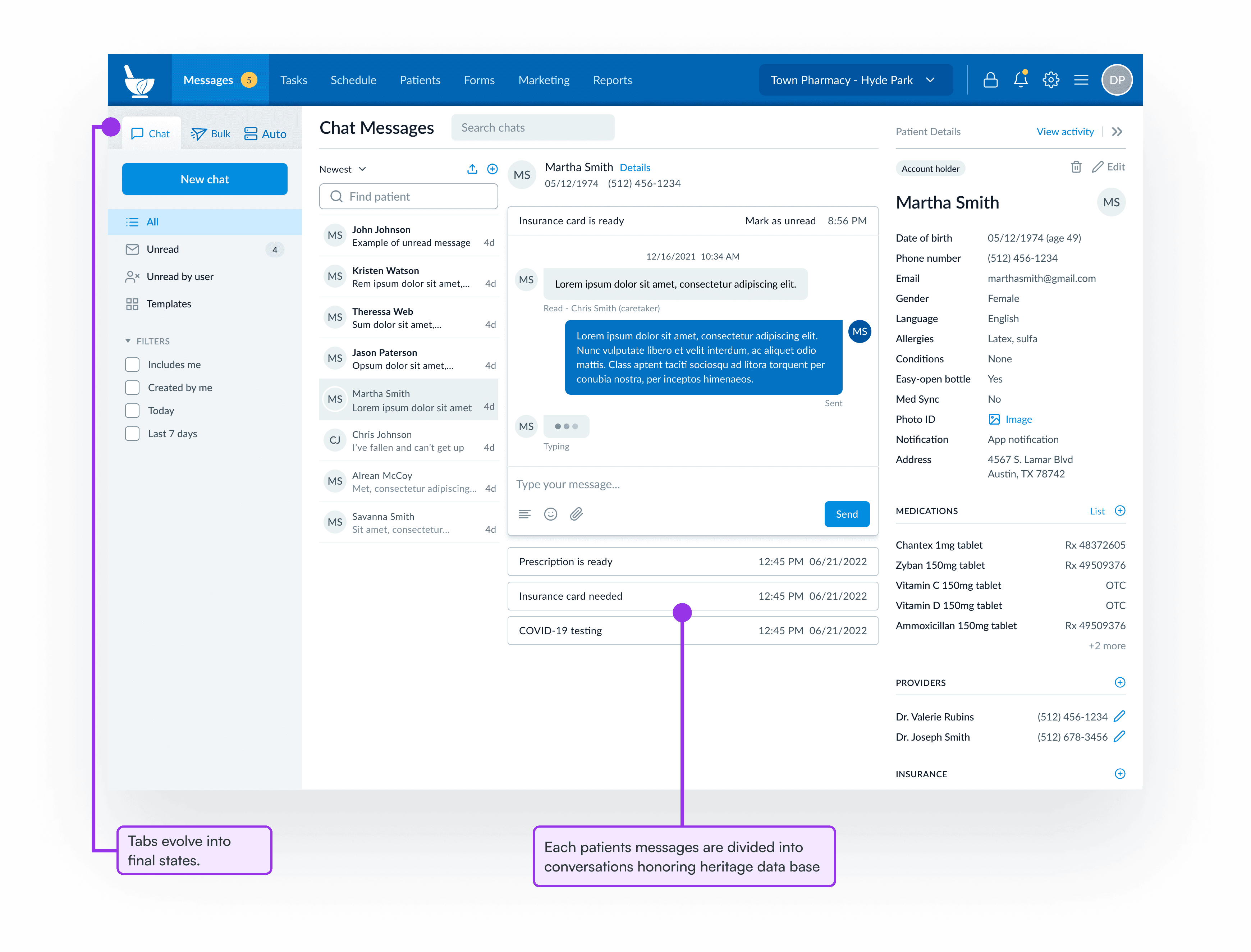
Messaging landing, 1 to 1 chat
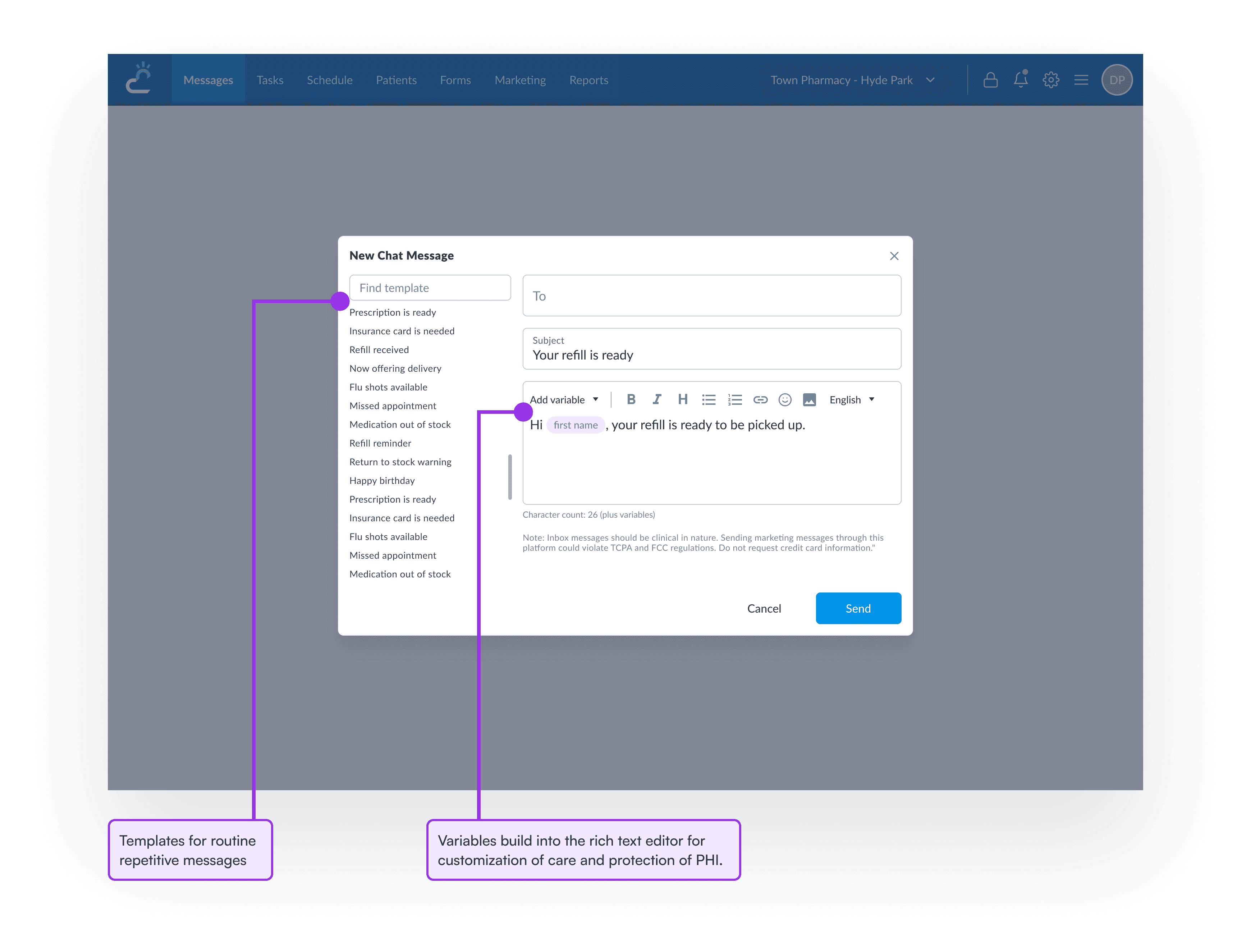
New chat modal
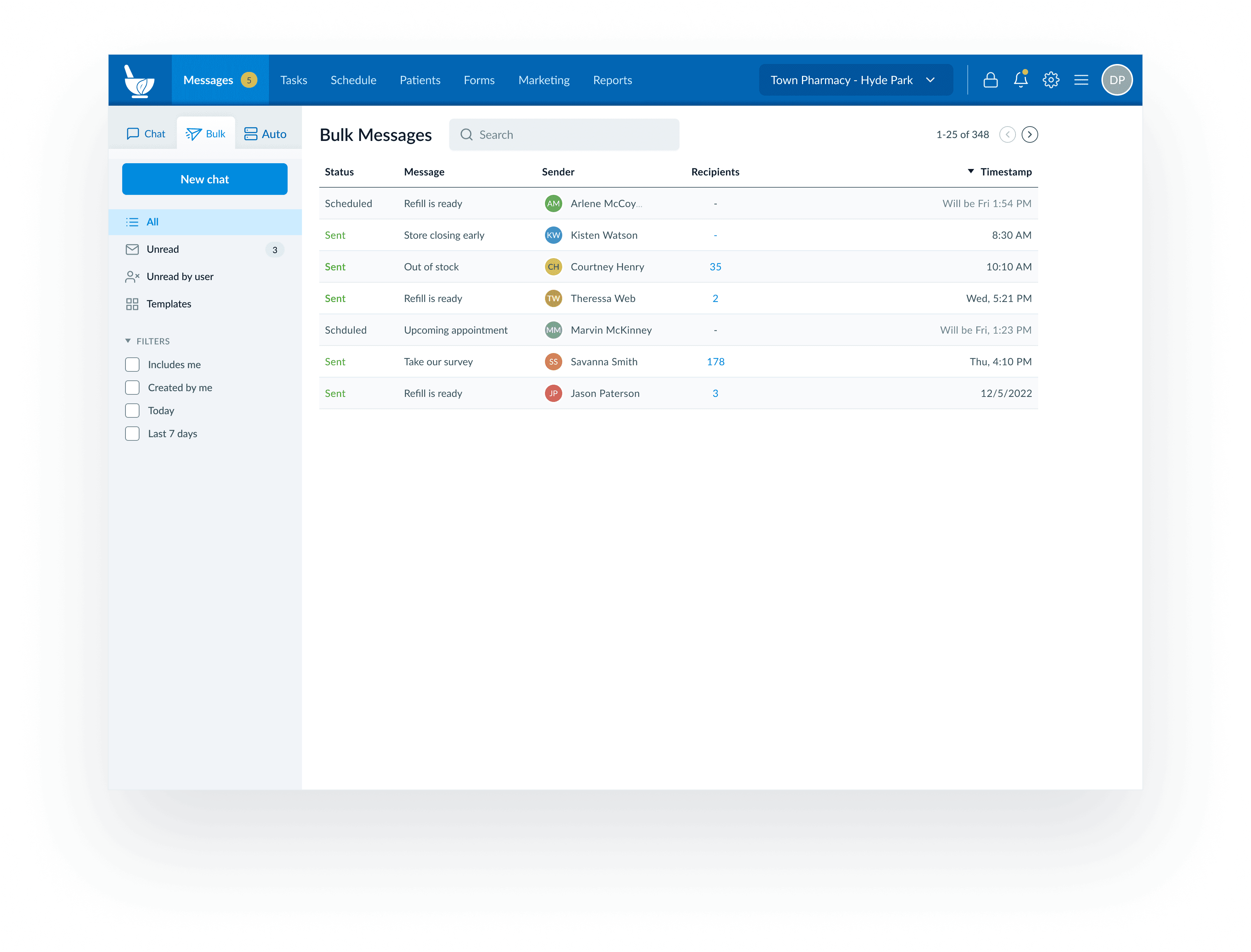
Bulk message tab, 1 to many
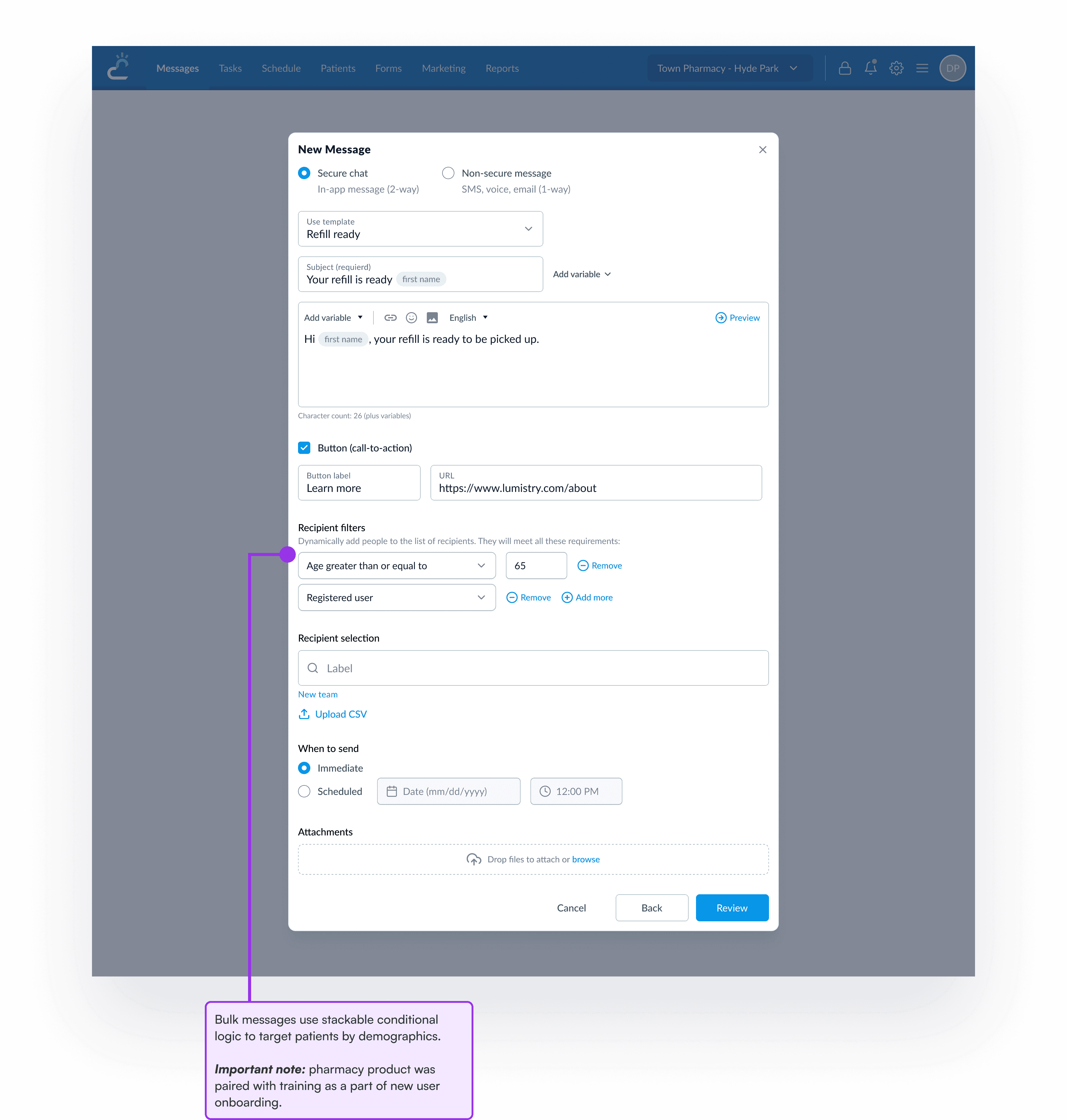
New bulk message modal
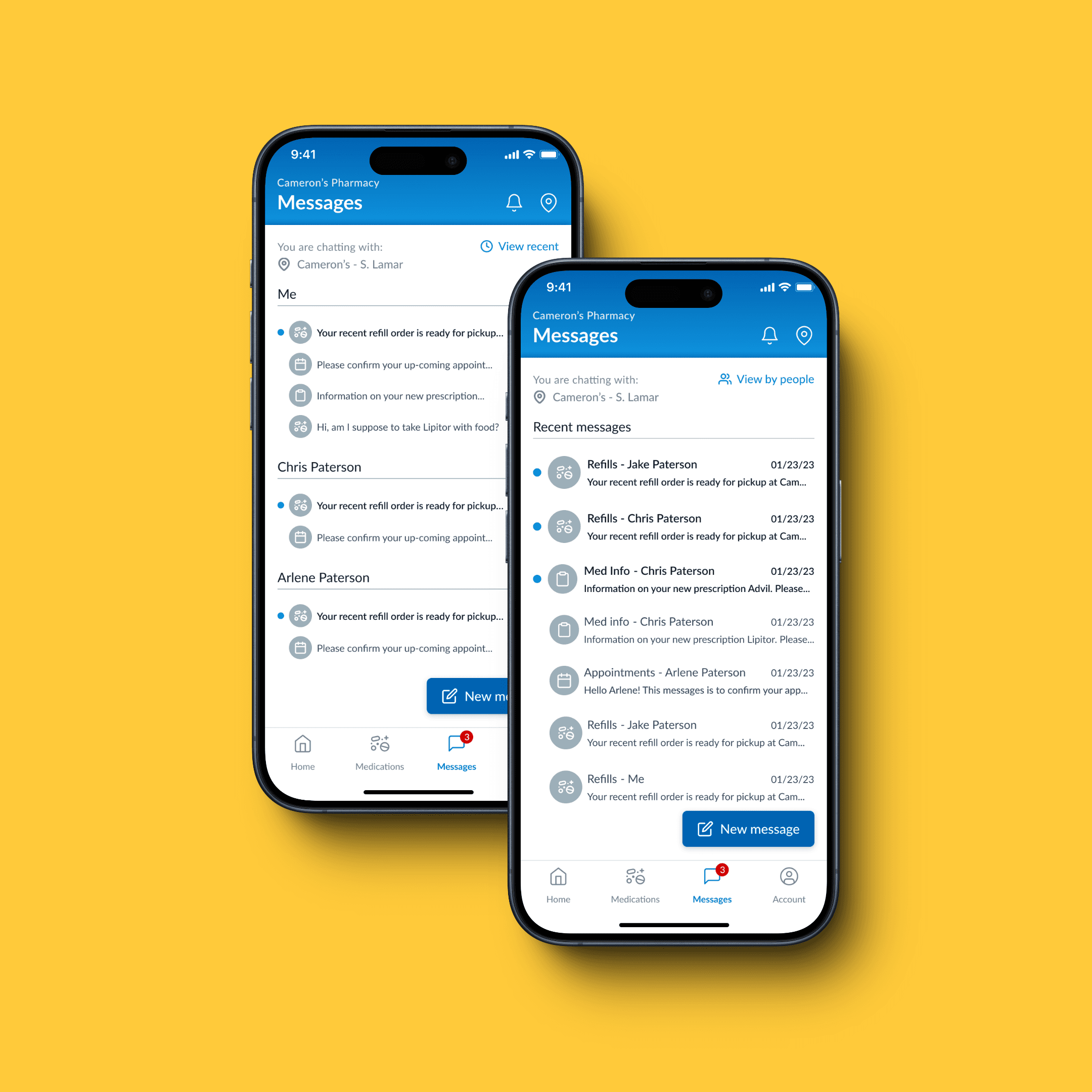
Patient experience - select screens
Messages landing (base)
Messages landing (caretaker view)
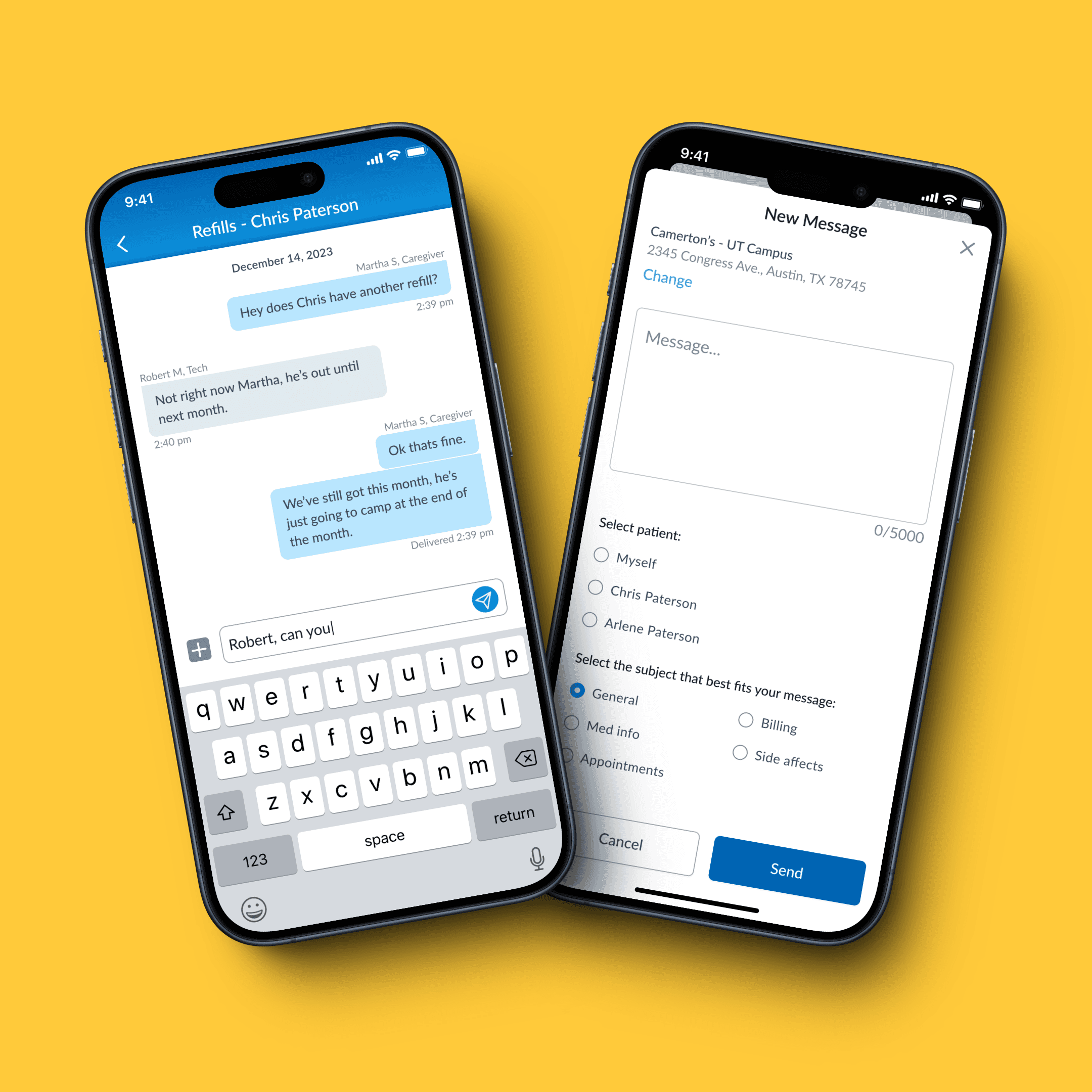
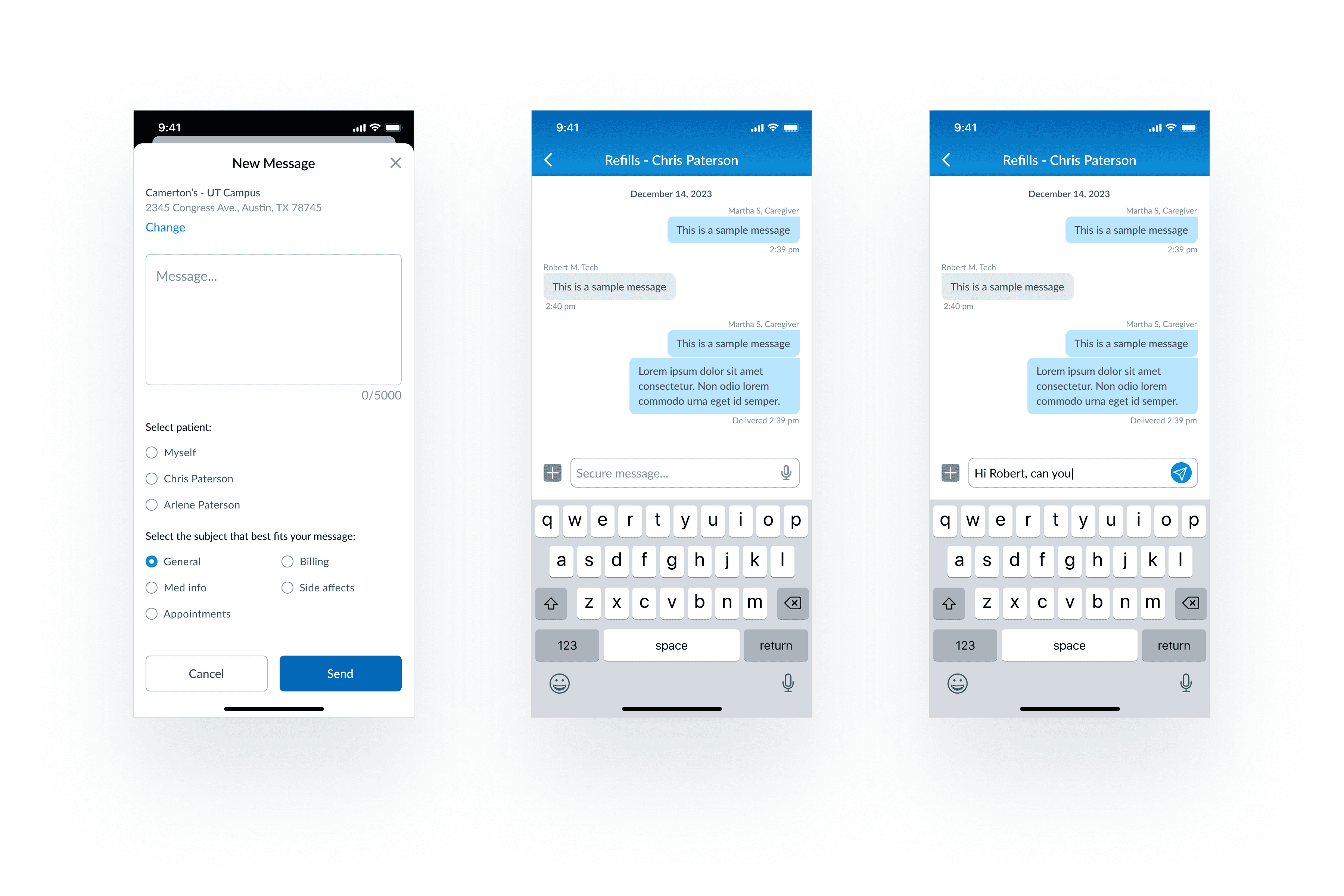
New message modal and open chat (caretaker view)
Challenges
Maintaining database compatibility with legacy product, which allowed support for message histories.
Design QA: I often did this myself but strived to train the dedicated team on the level of detail I was looking at. I focused on Storybook components a lot.
Launching in brown-field market required strong parity with competitors.
Next steps
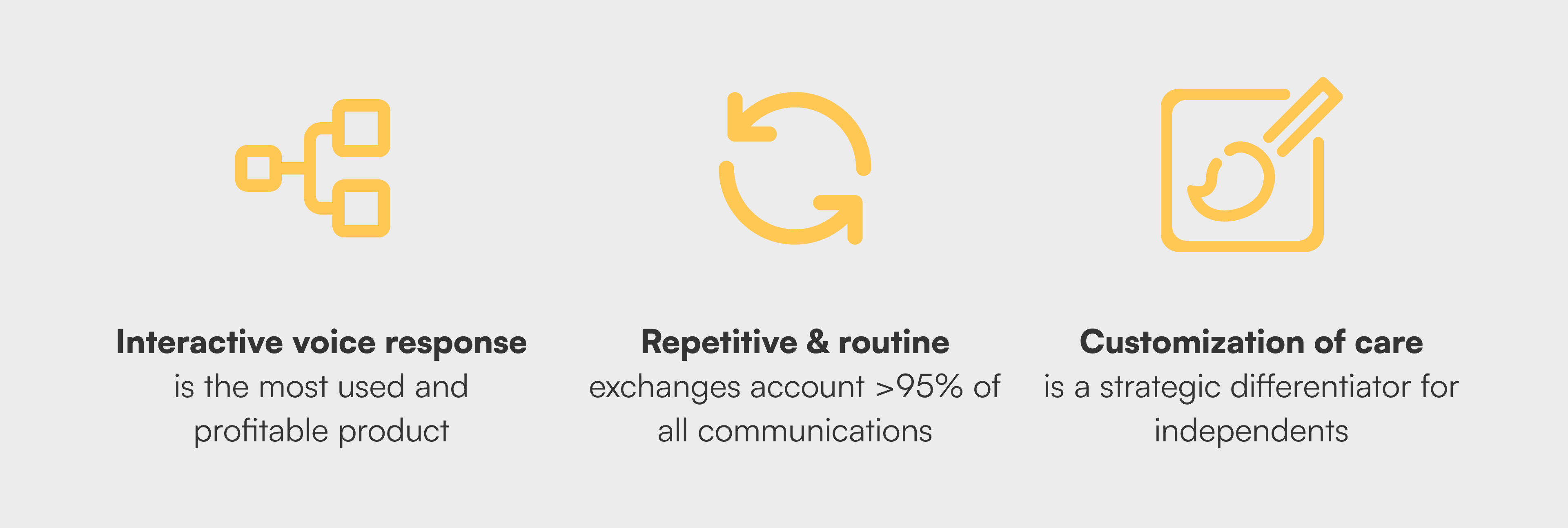
There are plans to further integrate the IVR system into the platform. At initial launch we offer a partial integration of the automated phone tree, Lumistry's most used and profitable heritage product.
Additionally I'd like to see more customization options to better accommodate specialized work flows for pharmacy business models that are more unique such as mail order and cosmetic pharmacies.